
The Next Chapter of “Nunaka” – Stories from the Co-Design Process
Authentic representation across media is essential; when people see themselves reflected on-screen, it fosters not only a deeper connection with the material, but also helps youth develop a more positive sense of self. A quick Google search brings up hundreds of research results supporting this claim.
The concept of “representation matters” certainly isn’t new, and the process of designing and developing media directly alongside members of the target audience represented in a project, called co-design, is increasingly baked into FableVision Studios’ production process. An example of this is “Resonant,” a Virtual Reality project developed in partnership with CyArk and co-designed with members of the Hopi community to explore their history. In another project, currently in development, we engaged over 250 members of the public that make up the project’s Community Insight Consortium to co-design a new research-based PreK assessment for Black children, Spanish-speaking children, and children experiencing economic hardship.
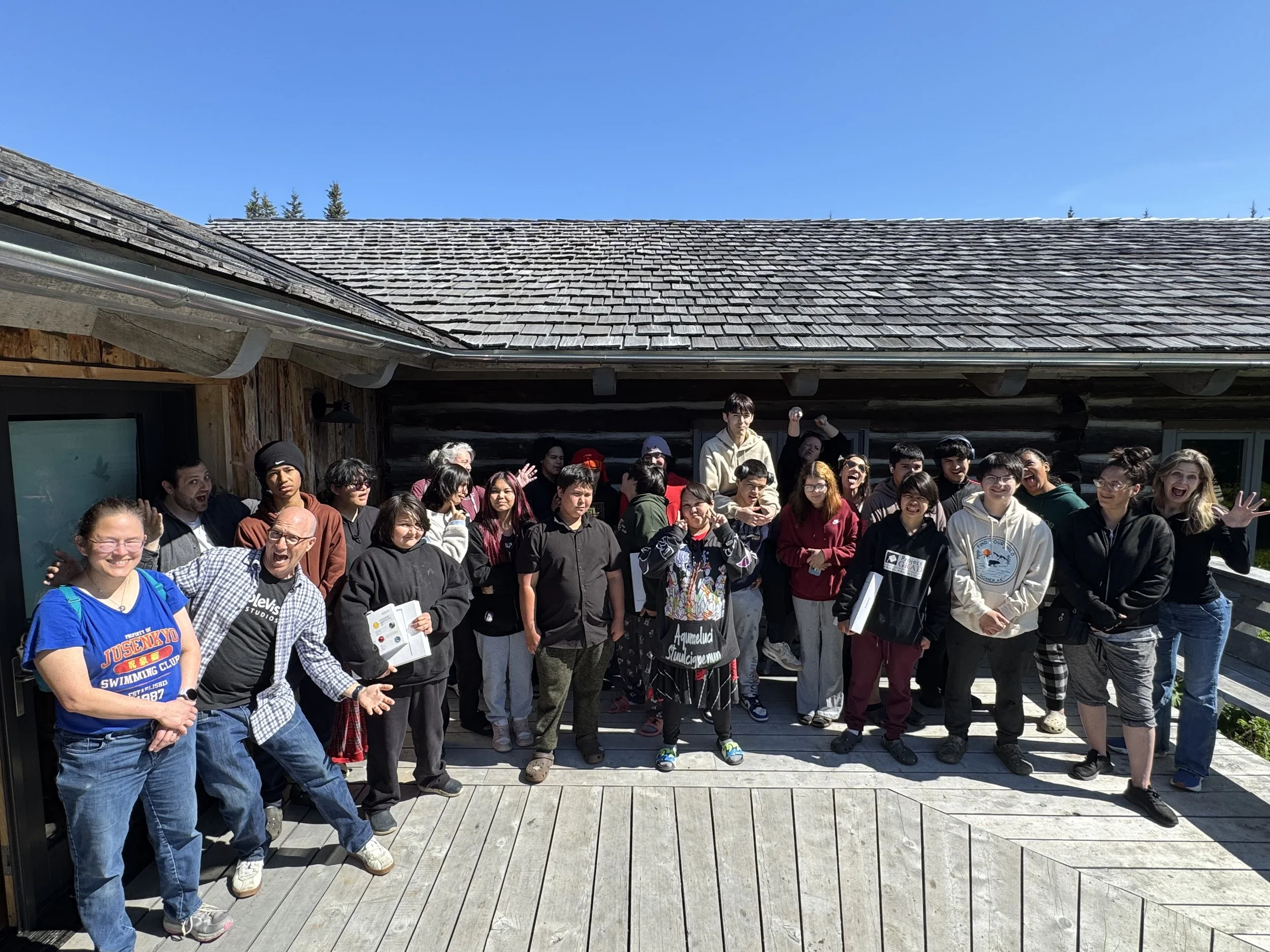
Sugpiaq teens, iThrive Games, and FableVision Studios staff at a co-design sprint in Alaska, June 2025
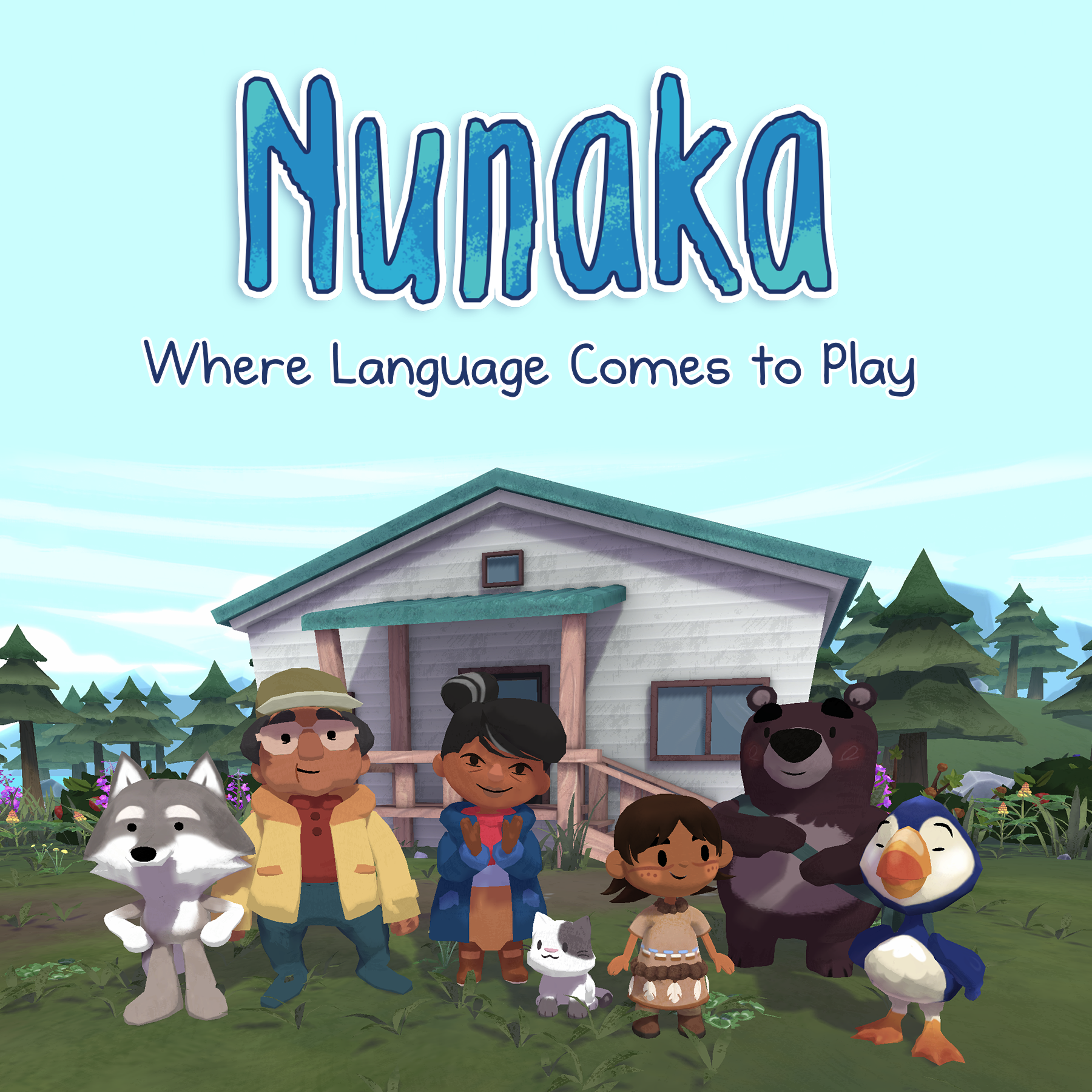
Most recently, FableVision’s commitment to co-design is illustrated through “Nunaka: My Village,” a story-based language and culture learning game for Sugpiaq preschoolers in the Chugach region of Alaska. The latest expansion included a robust 10-month intergenerational co-design process with teens, Elders, and preschoolers from the Chugach region. Leading that work are the original developers of the game, FableVision Studios, and new project partners, iThrive Games.
We sat down with five leads from the “Nunaka” expansion: Gary Goldberger, President & Co-founder of FableVision and Executive Creative Director of “Nunaka,” Jonah Gaynor, FableVision Producer, Jane Lee, iThrive’s Director of Production, Susan Rivers, iThrive’s Chief Scientist, and Angelina Kalunka Roehl, Chugachmiut’s Cultural Heritage & Climate Justice Manager. Our conversation explored a variety of topics, including best practices for co-design, personal anecdotes from the production process, and the integration of Sugt’stun language and culture into the game.
What is “Nunaka?” Why is it important?
Angelina Kalunka Roehl, Chugachmiut: “Nunaka: My Village” is a Sugt’stun language and Sugpiaq culture game targeting 3-5 year olds in Alaska. “Nunaka” is “my village” or “land” in Sugt’stun. It is a story that is preserving Sugt’stun and culture while representing the communities in Lower Cook Inlet villages. It is preserving our way of life through stories of our Ancestors.
Jonah Gaynor, FableVision Studios: Chugachmiut does amazing work with Alaska Native communities in the Chugach region and, over time, found that their number of fluent Sugt’stun speakers and people in touch with their culture is dwindling. At the same time, they saw that tech was a growing presence in the lives of Alaskan children. They started to talk about creating something that was for, by, and about these people, their community, culture, and language.
Gary Goldberger, FableVision Studios: The data suggested that the school dropout rate for Indigenous youth in the community was increasing over time. Community leaders wanted to create a school readiness program that included culture and language.
“[Nunaka] is a story that is preserving Sugt’stun and culture while representing the communities in Lower Cook Inlet villages. It is preserving our way of life through stories of our Ancestors.”
Jonah: Right, so all of that came together into them deciding to make a game. FableVision has been working on “Nunaka” with Chugachmiut for the past three (nearly four!) years. It started with three pillars (language, culture, school readiness goals), and the nature of the project has evolved. At the beginning, it was a lot of us learning about the culture to make something authentic, and doing that through a process where the members of the community/villages could take part and ownership in it.
Gary: This project was always envisioned to include co-design. We were able to take it to a new level in this phase with teenagers, making it a multigenerational creation process. The process was impactful for everyone involved. This will now continue so that future generations are exposed to their native language, see their culture represented in a game, and hopefully this will have the affect of students staying in school longer.
What was the co-design process like in Phase 1? How did it evolve in Phase 2?
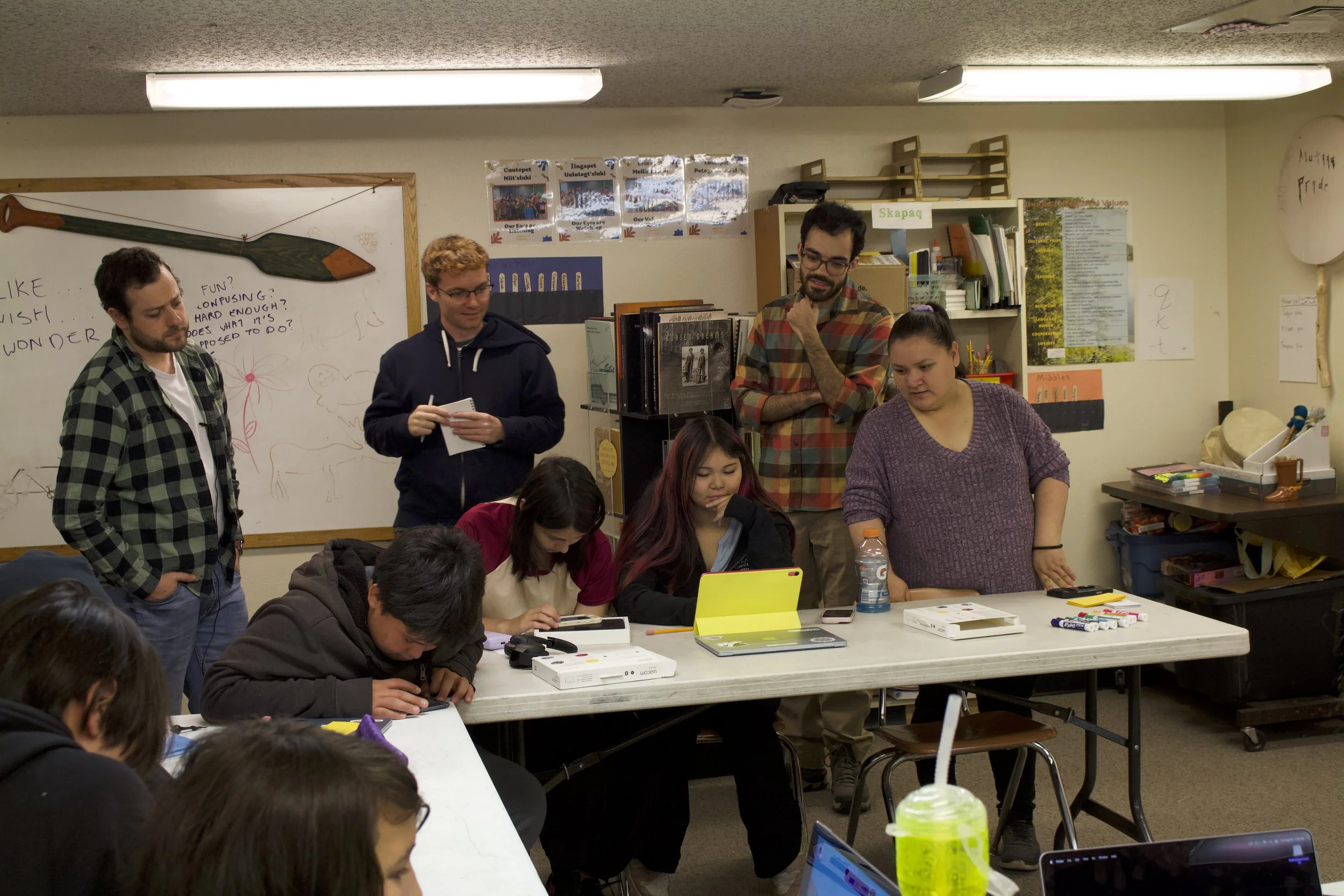
FableVision Studios staff and Sugpiaq students during a co-design session, August 2025
Angelina Kalunka: For phase one, they met with the Elders, who spoke Sugt’stun and/or knew or practiced Sugpiaq culture from the Chugach region, via Zoom and a person-to-person meeting. They did this to record the Elders, then shared the game and finalized the audio in Sugt’stun and English. During the testing phase, when we went into the communities, we invited parents or guardians to bring their elementary students to join us and try the “Nunaka” game. Elders were really enjoying it. The second phase included students from the Lower Cook Inlet using their own traditional knowledge of language and/or culture, with guidance from the Lower Cook Inlet Sugt’stun speakers and Sugpiaq Culture bearers. During the testing phase, the communities were invited to come to the gathering to test and enjoy the new games. The students who participated in the game design classes got to see how their work helped create four new episodes, add 10 new minigames, and introduce new characters and locations.
Jonah: Phase 2 of this project was funded by an Accessing Choices in Education (ACE) grant that emphasized kids’ career readiness skills. We were able to achieve this in the codesign process; they learned coding, art, design, management, organization. These are all skills that are important for careers. Phase 2 pushed at that more and brought in younger people, teens, so that there was an intergenerational component to the co-design process.
Gary: We incorporated curriculum from Head Start that included school readiness goals. The teens were able to leverage the content and integrate those learning goals into a game design that was engaging and reflected their view of the world.
Jane Lee, iThrive Games: This phase included weekly calls with Elders where they shared their stories and told us about how things played out when they were kids. It was a nice model for us to bring into working with the youth. We’d say, “This is what the Elders were saying, what do you think of that?” Then they’d respond, and we’d think about how that might fit into the game.
“Games are a collaborative interdisciplinary art form. It’s complicated and takes all types of people. No matter what you’re good at, there’s always something you can contribute to a game.”
How is FableVision getting more cultural representation into the media the studio creates?
Angelina Kalunka: By meeting regularly with Chugachmiut and making space for Elders, youth, and Sugt’stun speakers to guide the stories and language.
Gary: It has always been important to include people’s voices in the creation process; that’s pretty core to who we are as a studio. Over the past 5-10 years or so, we’ve formalized our co-design process that’s more intentional and allows for the appropriate time and space it requires. We’ve worked with community groups across the U.S., designed with the Hopi on Resonant, we’ve done co-design with iThrive before… It’s really important, really enlightening, and it makes a more powerful product at the end of the day.
Susan Rivers, iThrive Games: Involving young people in design is powerful, useful, and it pushes creativity. There’s as much learning for us as there is for them. They learned from doing, building skills, seeing their strengths show up in new ways, and in turn, they can really shape and impact design.
Jonah: (nodding) Games are a collaborative interdisciplinary art form. It’s complicated and takes all types of people. No matter what you’re good at, there’s always something you can contribute to a game.
“[The Sugpiaq] community is not isolated in the past; they wanted to see their current selves represented, not people frozen in a time before them. Co-design fosters this process. It lets them tell their own story. Co-design creates space for their voices to lead the work. They are empowered and powerful. ”
Why is co-design important?
Gary: From the beginning, our collective teams were in agreement that this game belongs to the Sugpiaq people. Indigenous groups have experienced years of people coming in to take their knowledge and heritage away from them. We want to honor them and be really clear about their ownership in this and our support role. Their community is not isolated in the past; they wanted to see their current selves represented, not people frozen in a time before them. Co-design fosters this process. It lets them tell their own story. Co-design creates space for their voices to lead the work. They are empowered and powerful.
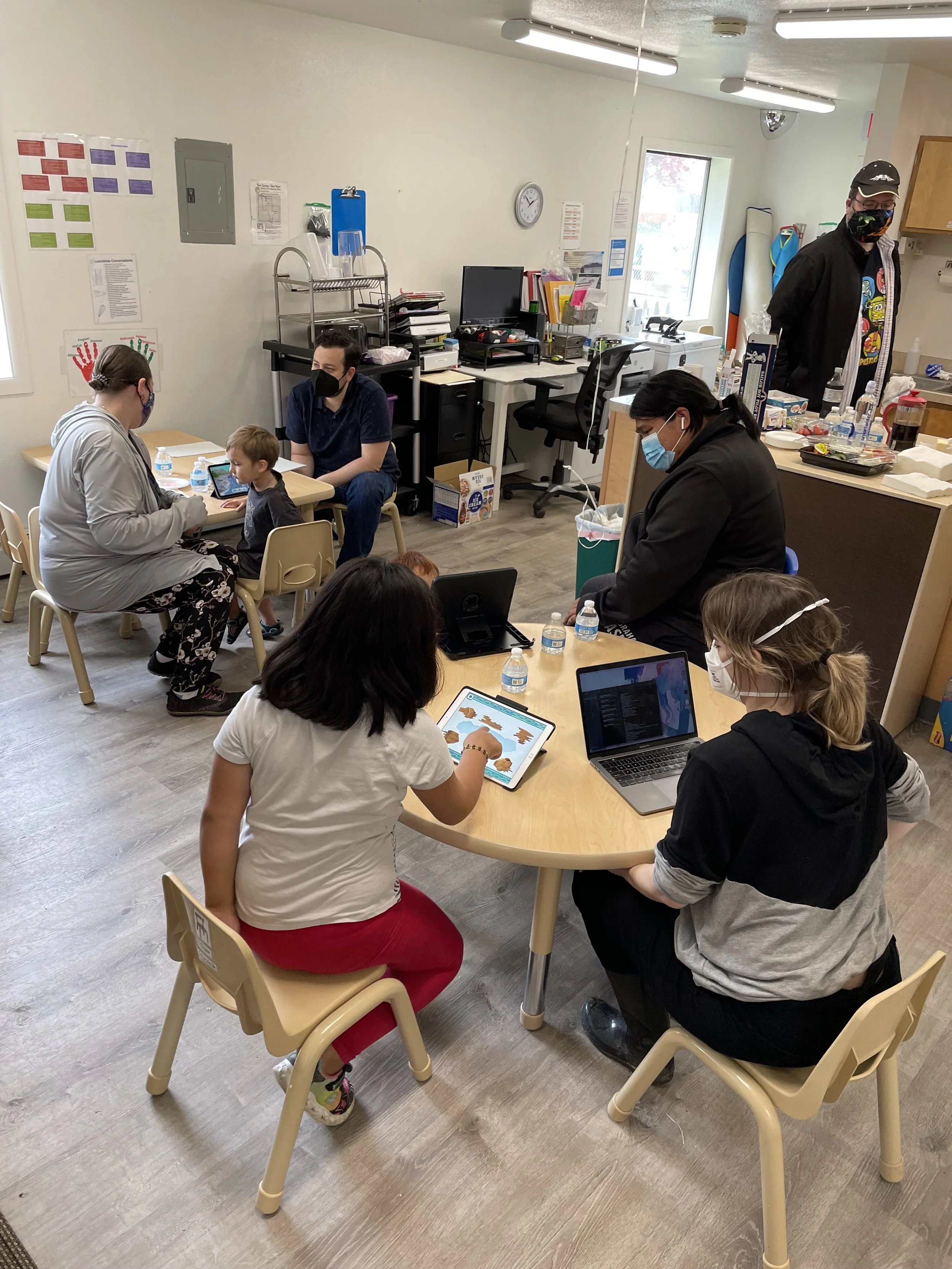
FableVision Studios and Sugpiaq community members in a co-design session in Alaska, August 2022
Jane: Co-design is essential in that the people who will be most impacted by a product have a say in what is created. In this instance, these are the people who will carry this culture forward, and so we need to design with them. The process [of co-design] itself is transformational. The intergenerational piece was part of the process, and their stories and perspectives were both appreciated and valued. It’s a super bonus that the end result is a game
Susan: For a game that has a goal of supporting the continuation of culture and language, co-design is essential. You’re asking questions like, “How can we impart skills from this community onto this community? What are their stories and ways of life? How do they care for each other?” You can't learn that from reading about it, you learn it from the people themselves. There’s so much opportunity to connect and learn new things that, as a designer, it makes it a lot more interesting.
Gary: The way iThrive ran the co-design sessions with the teenagers, we had walks twice a day. It was the best bonding experience. We got to hear their casual stories and get to know them on their own terms and on their home turf.
Susan: Right, some of it is just trying to integrate into their lives. One of the core mechanics of co-design is connecting with people in-person, and it requires commitment and resources to do that. We did the walks, we played improv games, and we got to see people emerge in different ways. Giving people different opportunities to show up is really important.
Angelina Kalunka: FableVision was always ready to create what we envisioned as our story through episodes and games. This helped the game designers create “Nunaka” as the Elders saw it: a way for our youth to learn through playing games.
“We build trust and let the community guide the work. We make sure the stories and culture are shared the right way, by the people who live them.”
What are some of the guiding principles that guide your work in co-design, and why should more people be doing it?
Angelina Kalunka: We build trust and let the community guide the work. We make sure the stories and culture are shared the right way, by the people who live them.
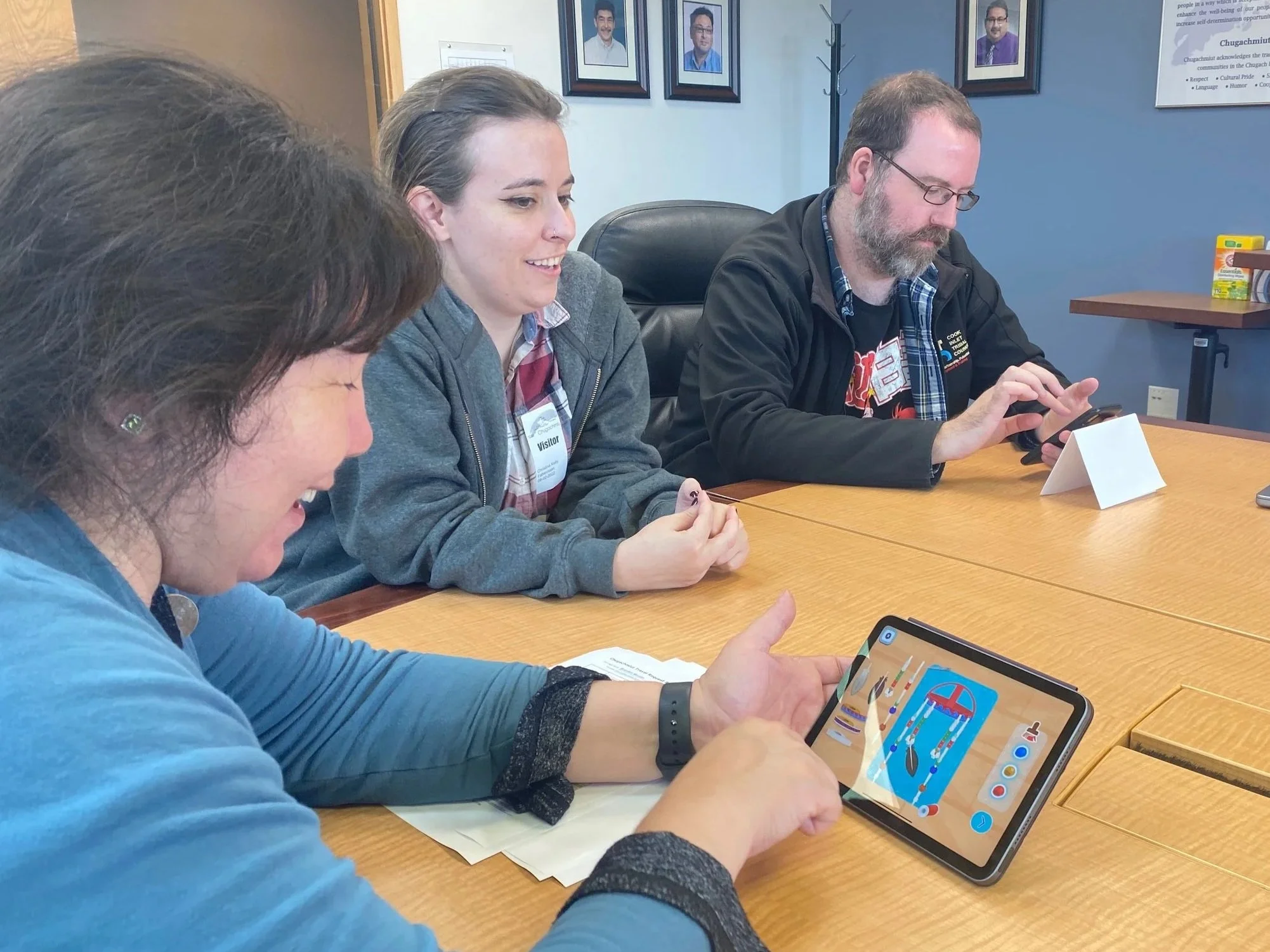
Chugachmiut and FableVision staff playing “Nunaka,” August 2022
Jane: It quite literally took a village to create this game: the teens, the older adults who helped the teens, the people who prepared food, gave tours, the Elders who participated in calls every week, etc. It’s so important that the young people are part of this process because youth are central to keeping the language strong.
Susan: On one of our walks with the kids, we hiked into the woods to find the YumYum tree that is featured in the game, because the kids wanted us to see it. On the way, we stopped at different houses, picked up different things from their homes, the dogs were with us… It was like we were inside the game while we were connecting with the kids. And as creators, experiences like this allow us to have more of the essence of the stories that are portrayed in the game. This informs design decisions, especially when creating a game about a group of people. You can’t know what this is until you’ve experienced it.
Jane: Yeah, this game is very “lived in.” We worked with students to come up with new characters, and the kids mentioned real people in their town that they wanted to see represented. We had a better co-design experience from seeing their villages first-hand and through their eyes, and getting a real sense of what people looked and felt like. We’d done some virtual co-design work already, but this let us have a deeper understanding, and we were lucky that the youth were excited to share things with us.
Susan: They have an incredible generosity and pride of place, and a wanting for us to see the things that they do. We were truly welcomed in, and this is communicated in the game.
“They have an incredible generosity and pride of place, and a wanting for us to see the things that they do. We were truly welcomed in, and this is communicated in the game. ”
What’s something that’s surprised you?
Angelina Kalunka: The first phase was fun, seeing our Elders and elementary students test out the new game. The testers helped identify updates that would make it run more smoothly. I was surprised by how much of the culture the students shared. The students were also very interested in learning how to become game designers, and it seemed they found some game design skills they liked more than others.
Susan: The rhythm of the young people and adults’ day-to-day is so much in tune with the season/climate. The youth weren't available a lot of the summer because they needed to prepare and store fish and other foods for winter. There’s so much I take for granted, learning how they structure their schooling and time. There’s a deep appreciation and connection to the environment that is really powerful to see. A group of young people came in and out from our sessions, went fishing in between, cut up the fish, used all the pieces, froze it, prepared it… these young people own these really big pieces of the community.
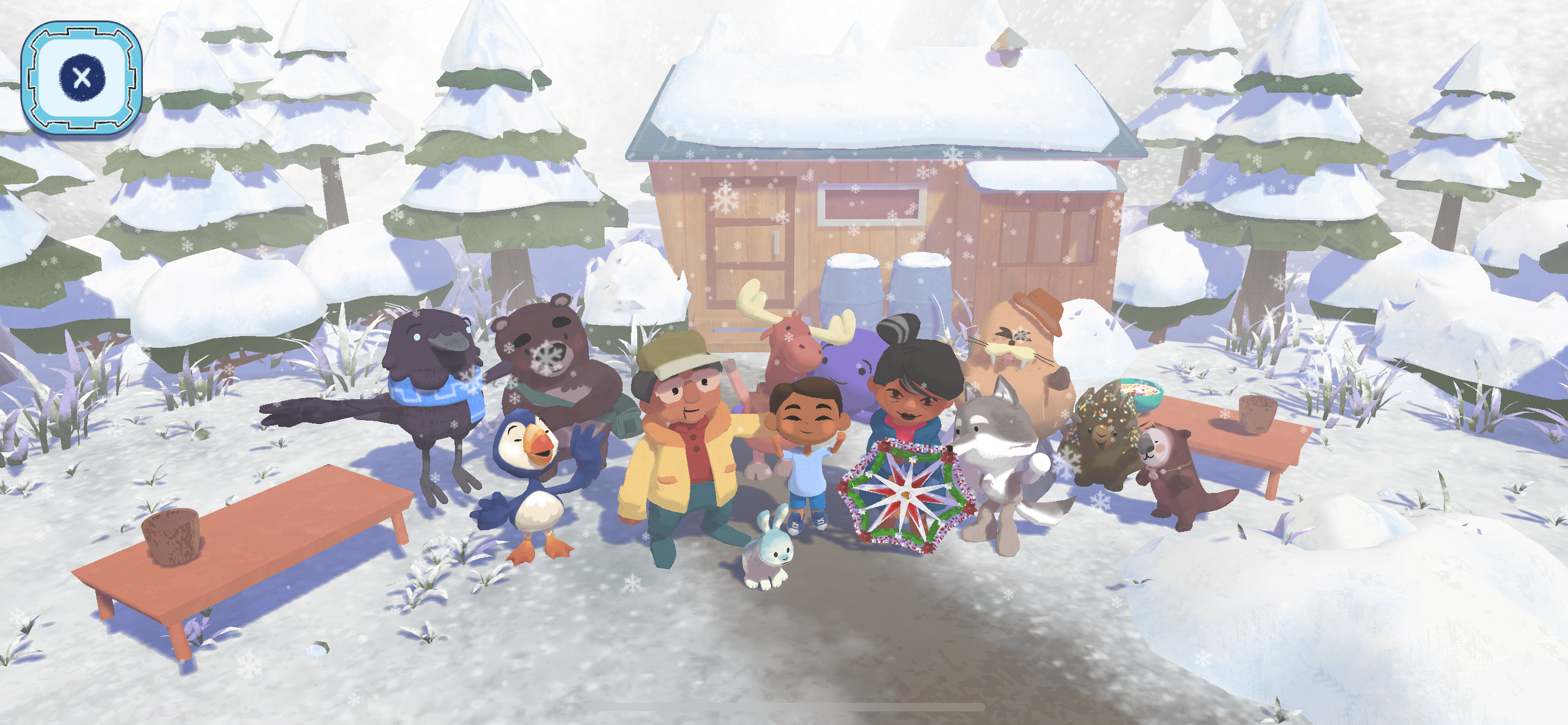
Jonah: They all understood that “Nunaka” was an already-existing piece of media that they were contributing to and helping grow. So, for example, one kid wanted to see a raven in the game, and he already got that the game had an established visual style. He said, “do the raven but make it in ‘Nunaka’ style.” That was so cool to me.
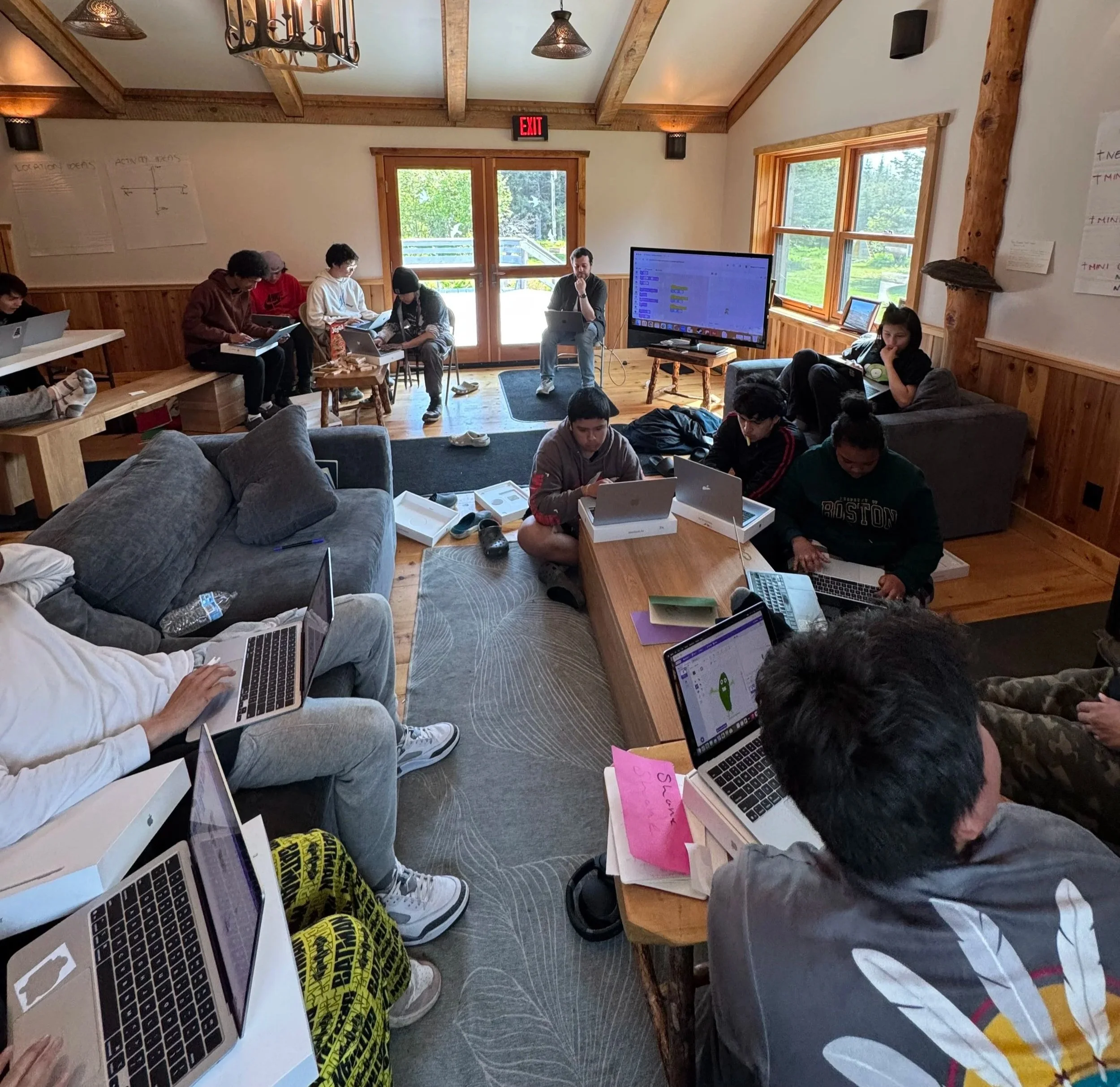
FableVision Studios staff with Sugpiaq students during a co-design session, June 2025
Gary: All of the kids found something they were interested in and brought it to the game. Jonah taught students how to code, a student showed us how she was animating characters. They all found their personal alignment with the game design process. They were all supporting each other, which was lovely to see.
Jane: It isn’t always easy having different ages work together. But in this group, they all took care of each other and worked together from the start because they already knew each other. They learned what they are good at from each other and got to learn more about themselves.
Gary: And the game is also having an impact. The process was so impactful for everyone, this will now go on for generations that will keep speaking the language and knowing the culture, and the community’s contributions are already shaping what children will play, hear, and speak.
“FableVision was always ready to create what we envisioned as our story through episodes and games. This helped the game designers create ‘Nunaka’ as the Elders saw it: a way for our youth to learn through playing games.”
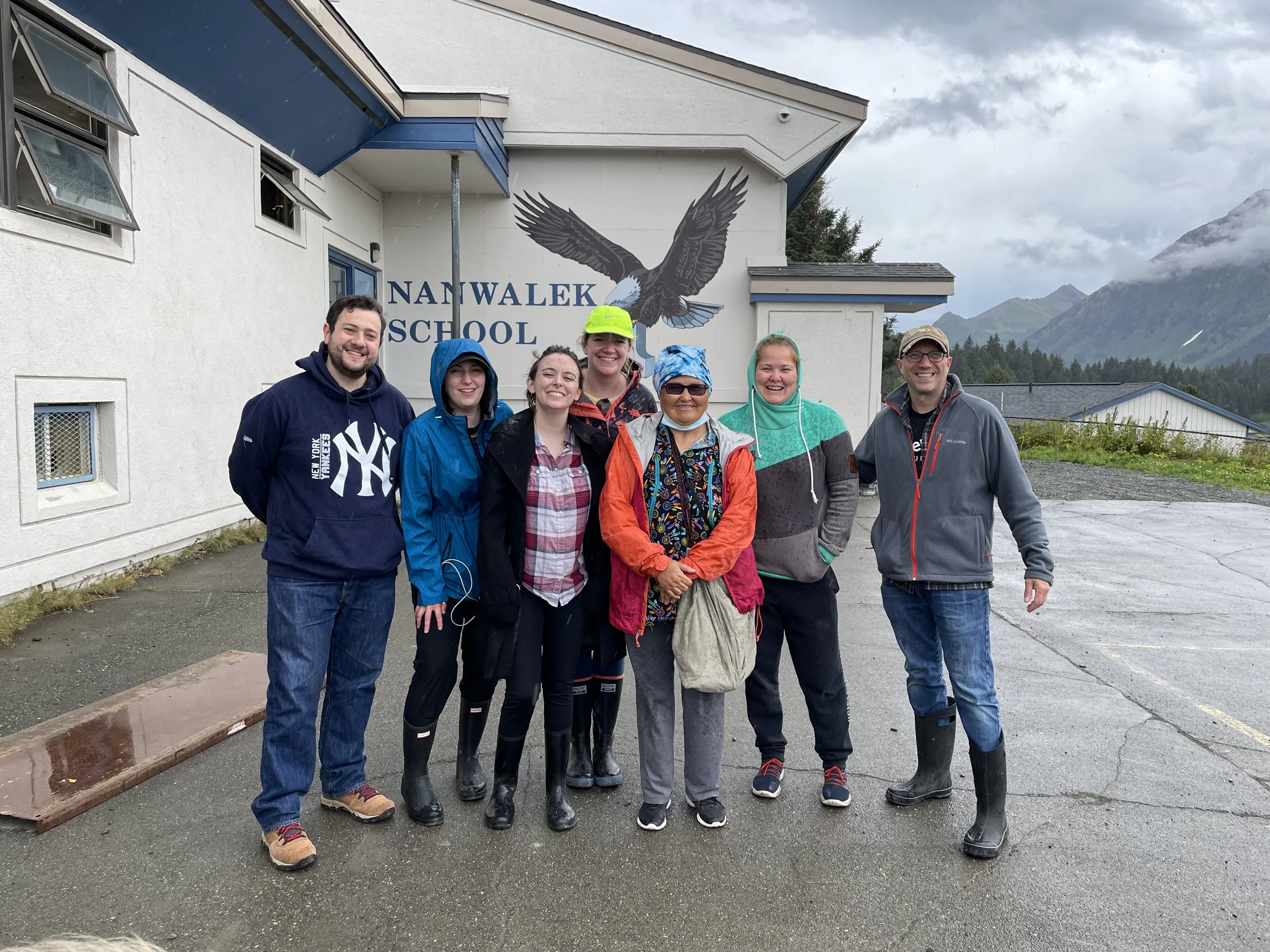
FableVision Studios and Chugachmiut staff, August 2022
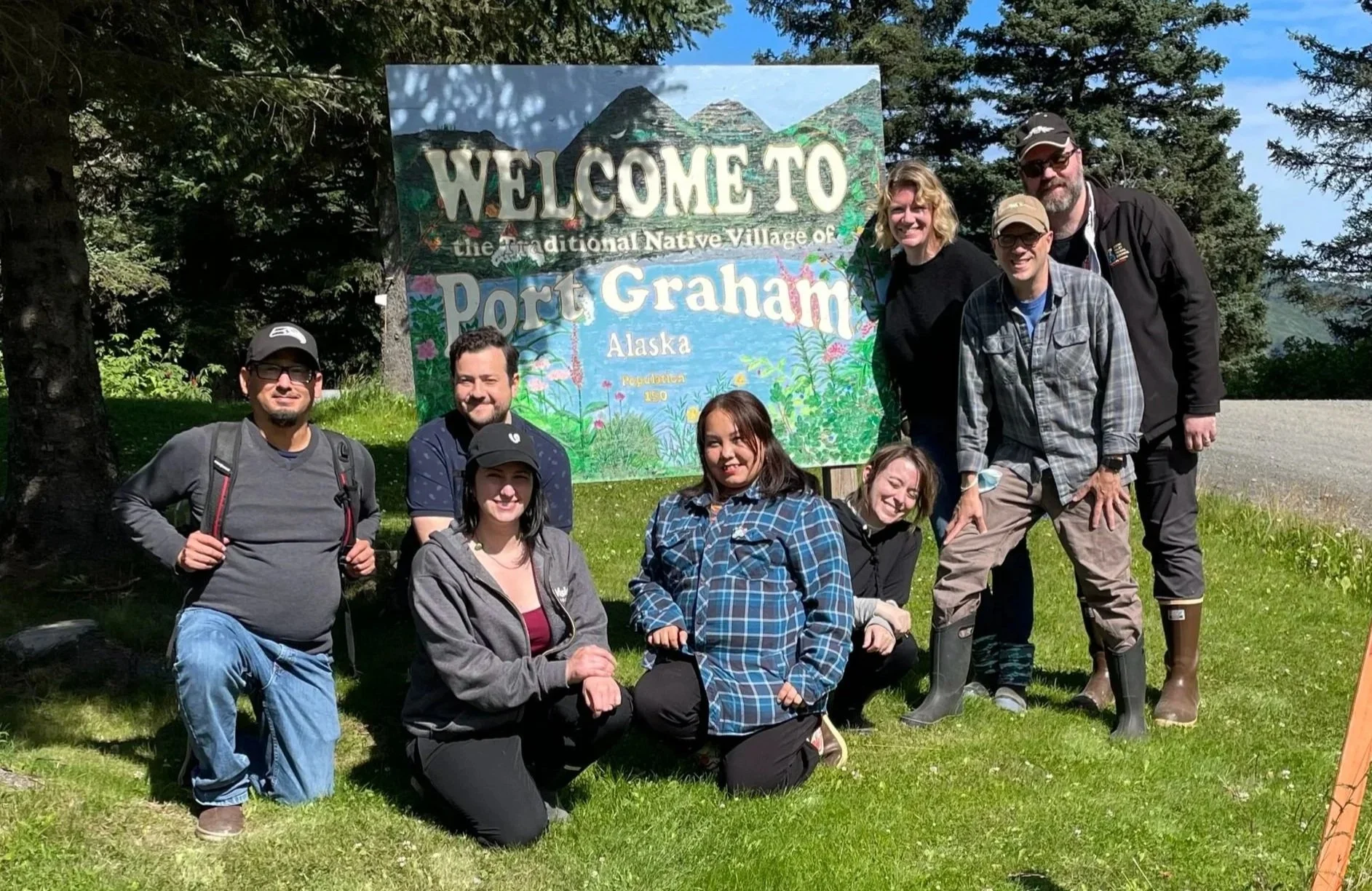
FableVision Studios and Chugachmiut staff in Port Graham, June 2022
