
From Egg to Frog: The Making of Animals Do WHAT?!? Part One
By: Creative Director Leigh Hallisey
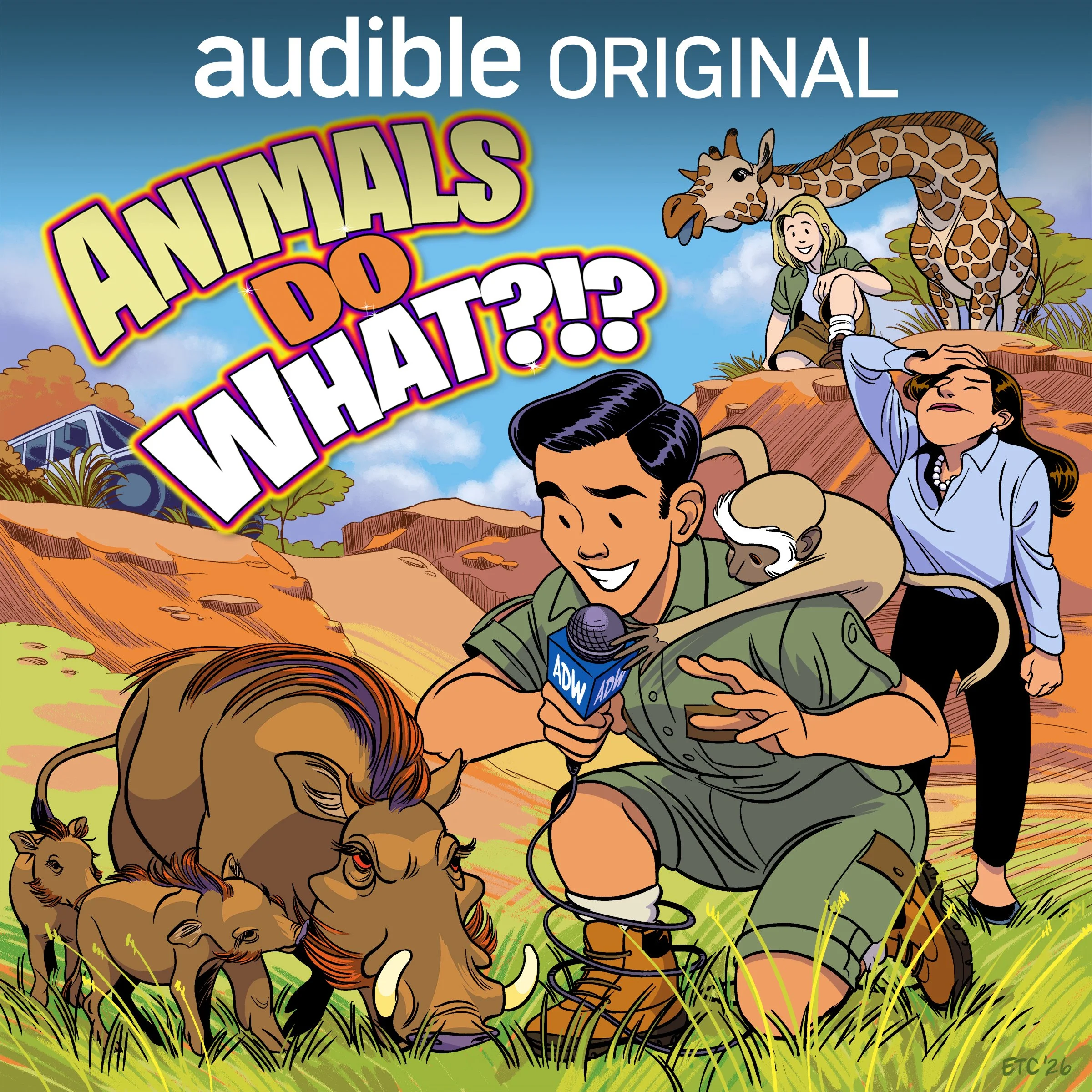

Step One: The Egg, aka, the Pitch
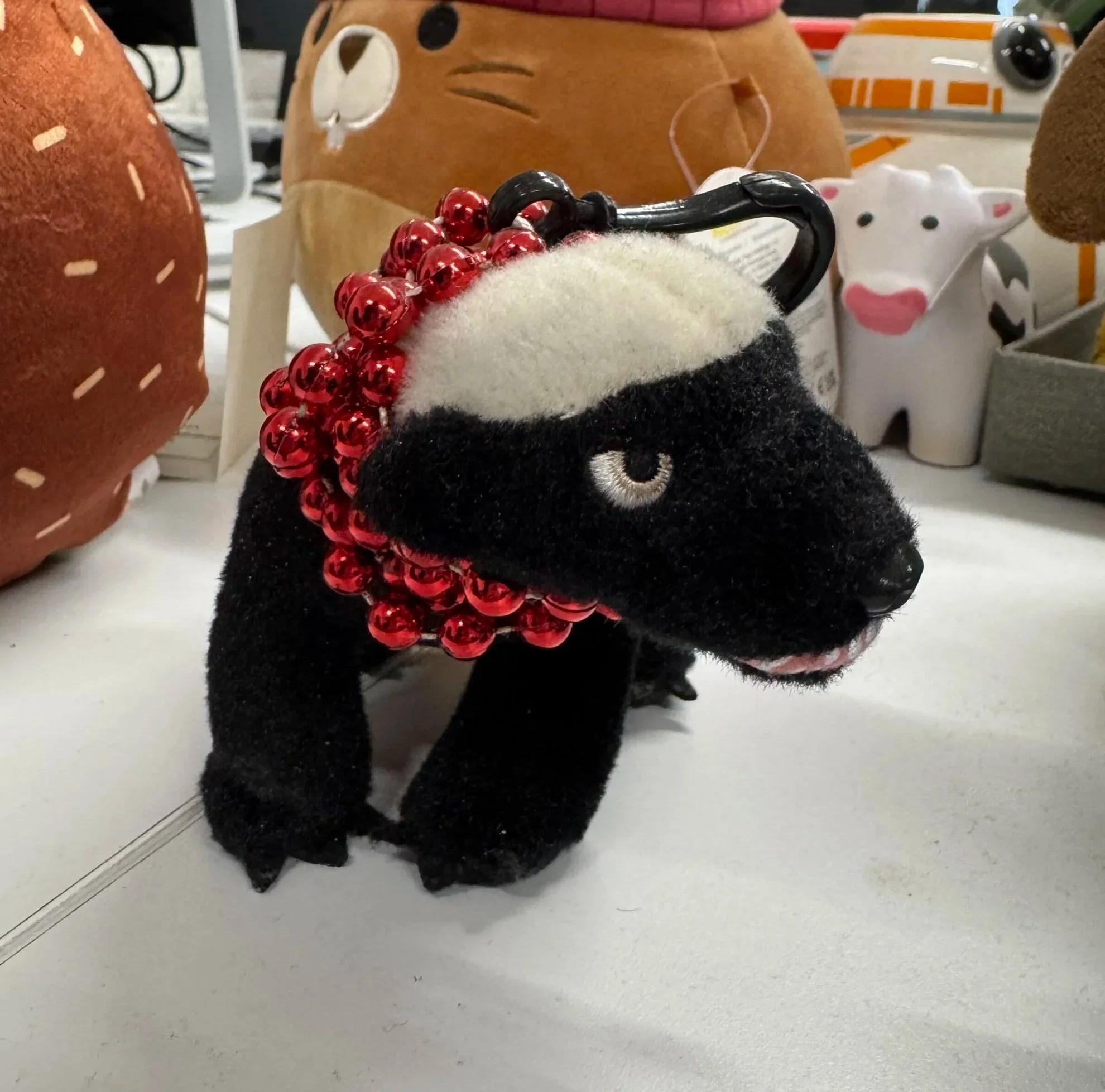
Leigh’s Honey Badger plushie
It’s been 15 years since the “Honey Badger Don’t Care” video found its way onto my screen (and into my heart), and I probably haven’t gone more than six months without thinking or talking about it since. The infamous video combines visceral footage of an aggressive honey badger devouring a cobra and nonchalantly getting stung by thousands of bees while gorging on larvae, with a sassy narrator who’s more interested in passing judgment on its “nasty” behavior than passing on scientific facts.
Instead of the measured, unbiased narrators usually associated with nature documentaries, “Randall” offers a play-by-play commentary full of bias and unfiltered disgust. You can listen to the narration without seeing the video and still know exactly what’s going on. (This point will be important later on).
Fast forward to 2025, when Audible reached out to FableVision’s podcast division, audiyo-yo, requesting a pitch for a kid’s audio show about wild animals. But not just a regular nature show, oh no. They wanted something funny, smart, and irreverent that tapped into kids’ love of silly, weird, gross things. Specifically, they wanted “Honey Badger Don’t Care” for 8–11–year–olds. Did we remember that video? Did we ever!
I scrambled to grab the talking Honey Badger plushie (loaned to me by my friend, deskmate, and FableVision’s Executive Producer Peter Stidwill) on my desk to show the client. Clearly, this was the sign of a collaboration written in the stars, as well as affirmation that spending hundreds of hours consuming funny animal videos, memes, and books over the last decade was not time wasted, but essential training for this moment. The journey to Animals Do WHAT?!? began.

Step Two: The Tadpole, aka, Concepting and Research
““If the brains of Pauly Shore, the finesse of Kramer, and the zeal of Billy Eichner came together in one human being, we’d have Chuck “Fanimal” Pandastone.””
From the start – and every moment throughout the production – our Audible team was an absolute dream to work with. They had a strong vision for the show, valuable input, clear feedback, and positive energy for days. Audible wanted a show that was funny and offbeat as well as factual, educational, and grounded in research. Unlike regular nature shows that are all ‘ohh, isn’t this lion family sooo majestic,’ and 'oh, that guy shouldn’t let that alligator eat a bagel from his mouth,’ our show would cover animal topics that kids are REALLY interested in, like why specific animals smell bad, make annoying sounds, and poop in different shapes.
The show needed a story with conflicts and strong, hilarious, unforgettable characters to build an immersive world that would draw kids in. We wanted to cover a wide variety of animals, habitats, and locations, and present information in different formats to keep the show interesting for all types of listeners, so we leaned into a “TV news magazine” format with an anchor, live “on location,” “pre-recorded” segments with field correspondents, and even commercials for fake products.
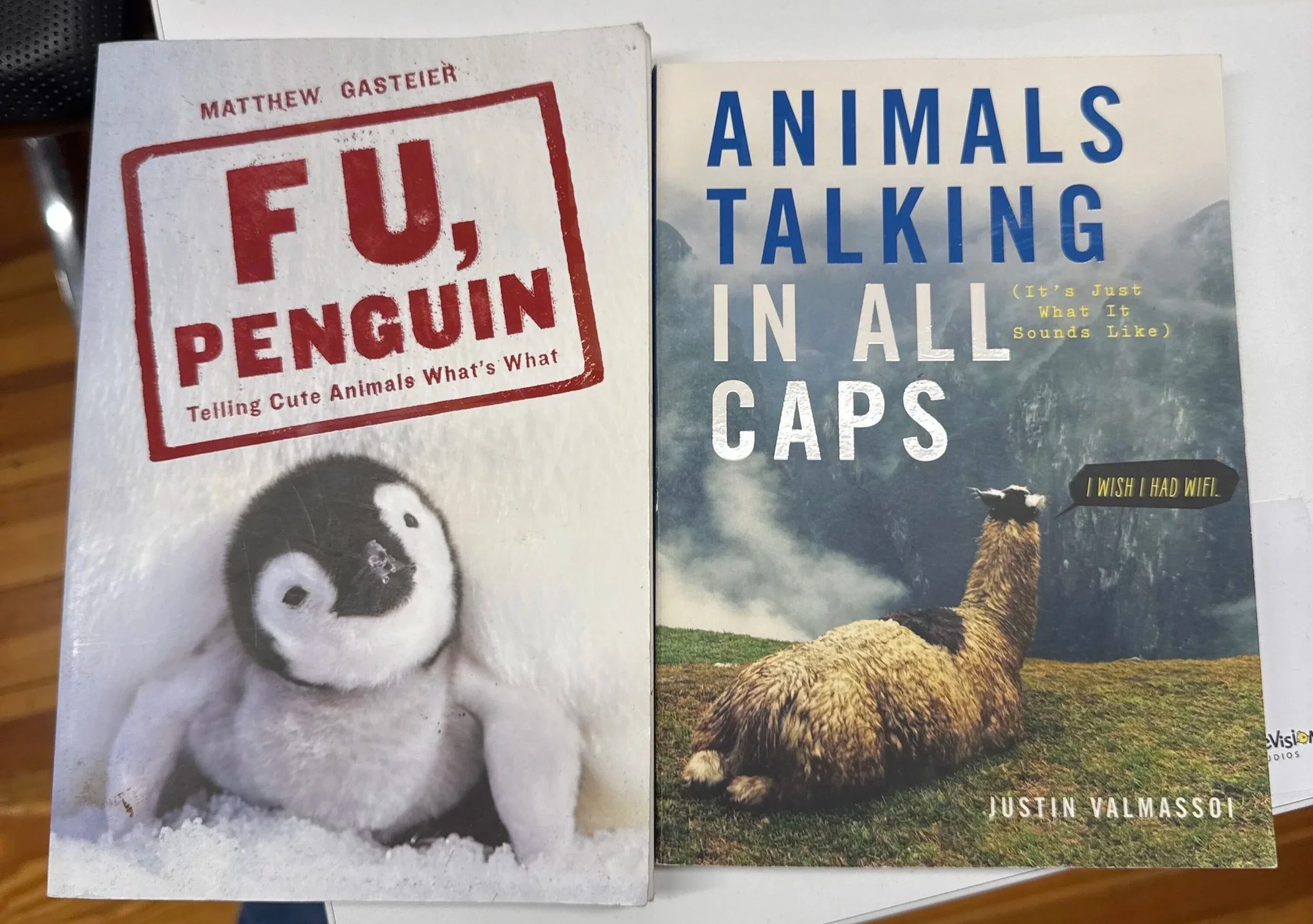
Leigh’s inspirational texts
We started with Chuck Pandastone, the human embodiment of the show’s ethos: chaos, curiosity, wonder, and ridiculousness. Chuck is the on-location correspondent, and his “live” segments are filled with the kinds of falls, inaccuracies, blunders, and mishaps that are edited out of traditional nature shows. If the brains of Pauly Shore, the finesse of Kramer, and the zeal of Billy Eichner came together in one human being, we’d have Chuck “Fanimal” Pandastone.
Chuck’s unbridled–bordering-on-dangerous–enthusiasm for wild animals, giant ego, and misplaced confidence provide the show with humor, heart, and the physical and situational comedy that are crucial to an audio-only show. The rest of our main cast – host Sierra Wilde, Field Producer Jedda Lee, and Staff Zoologist Dr. Arlo Firkins – have VERY different personalities and approaches to their jobs. The chemistry and banter between the characters were inspired by workplace sitcoms like Parks and Recreation and 30-Rock. The cast of Animals Do WHAT?!? banter, and playfully tease one another while still being (mostly) supportive and caring.
One of our tentpoles for the show was that our characters shouldn’t be mean or unkind. Of course, it’s hilarious to experience Chuck getting chased by a pack of wombats, sprayed by a Tasmanian devil named Denise, cornered by a bull, and terrorized by a hippo (all things that happen in the show), but we don’t want him to get hurt. Well, not REALLY hurt. A little bit of humiliation is okay.
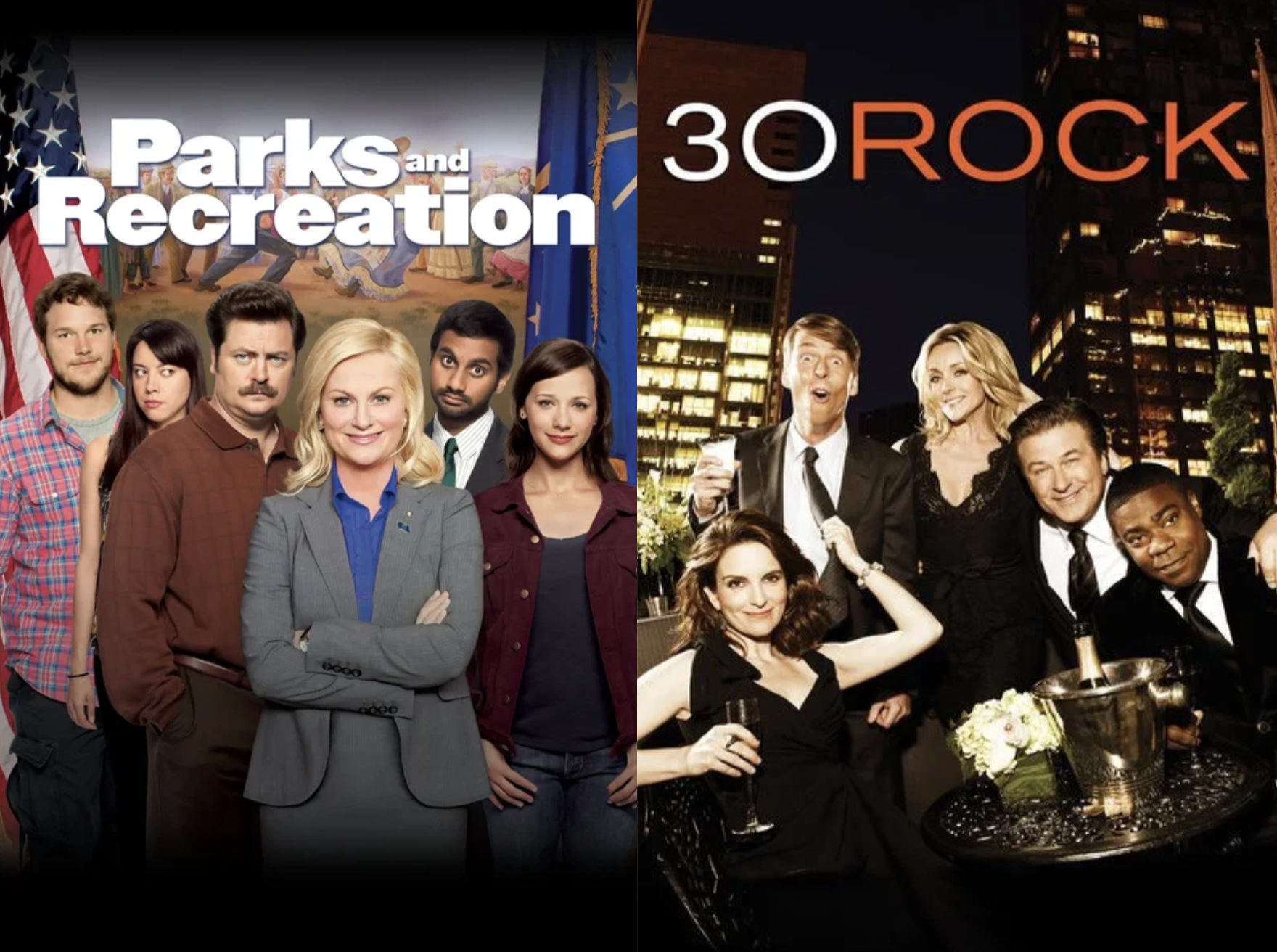
Leigh’s inspiration for the workplace dynamics in Animals Do WHAT?!?
Animals Do WHAT?!? is a lot of things, including an educational show for young kids. That means that any time we are talking about an animal, we have to be accurate about its behavior, habitat, and diet. And don’t forget, in a podcast, you can’t actually SEE the animal Chuck and his colleagues are interacting with, so the visual description and sound effects need to paint a picture of its size, appearance, how it moves, hunts, and eats, and what it sounds like. Remember way back when I said the Honey Badger stuff would be important later? Well, those chickens are coming home to roost.
Our pre-scripting research focused on unusual, quirky animals that would be fun to describe and make for “good audio.” Giraffes are majestic to look at, but not terrific for sound bites; our animals needed to growl, hiss, spray, splash, flap, rip food with their teeth, crunch bones with their jaws, and fart. Unlike “traditional” nature shows that group animals by species, habitat, or unlikeliness of friendships, Animals Do WHAT?!? episodes are built around themes like animals with the ugliest babies, weirdest butts, and ones who are bad at evolution, supported with in-depth descriptions and intentional sound design that allow listeners to visualize the animals as if they’re watching them.
Stay tuned for Part Two, where we dive into the world of Scripting, Casting, Recording, and Post-Production!